A few years ago, ranking on Google was the primary goal for most businesses. Today, people are asking questions directly to ChatGPT, Claude, Gemini, and Perplexity before they even visit a search engine. From “What’s the best CRM for startups?” to “Which digital marketing institute should I join?” AI search is quickly becoming the first stop for research and decision-making.
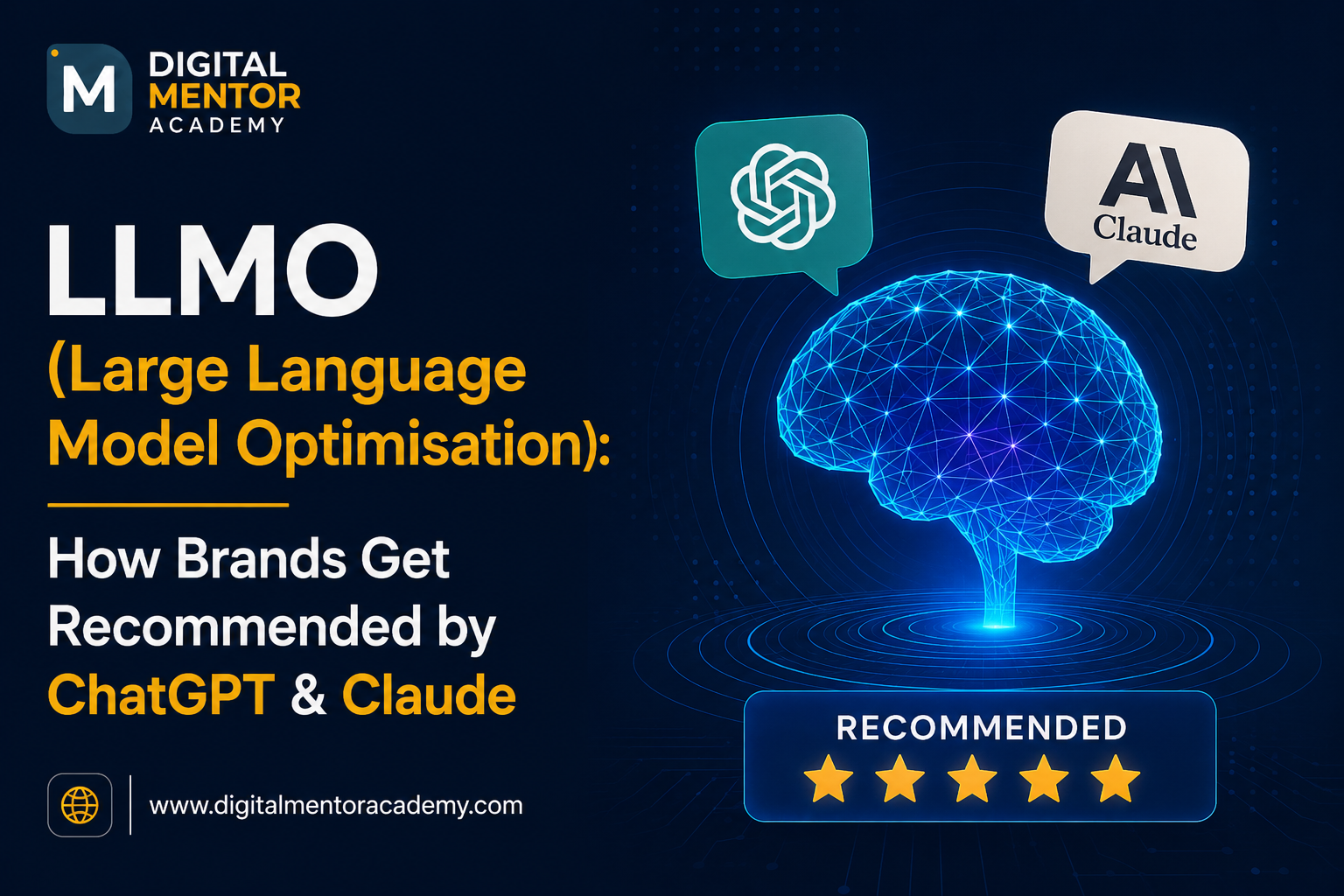
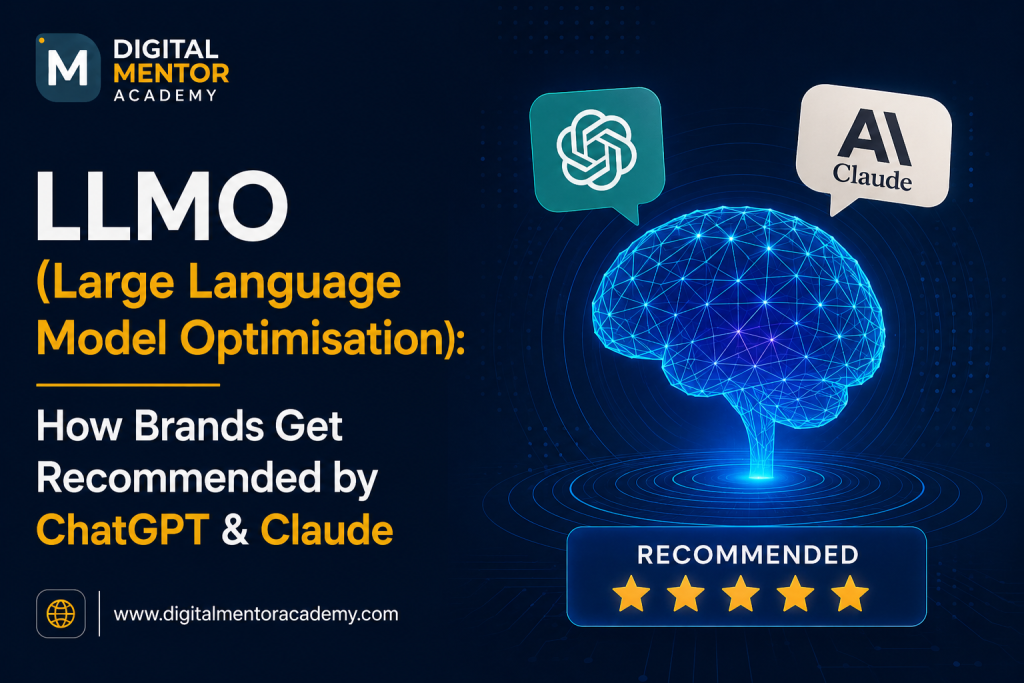
This shift has given rise to a new discipline called Large Language Model Optimization (LLMO). Unlike traditional SEO, which focuses on search rankings, LLMO helps brands become trustworthy sources that AI platforms can confidently recommend or cite. If you’ve ever wondered how to get recommended by ChatGPT, the answer lies in building authority, clarity, and credibility across your digital presence, not simply publishing more blog posts.
What Is LLMO?
Large Language Model Optimisation (LLMO) is the process of making your website, content, and online presence easier for AI models to understand, trust, and reference when answering user queries.
Instead of competing for the top spot on a search results page, businesses now compete to become part of the answer itself.
For example, if someone asks:
- Which are the best digital marketing institutes in Thane?
- What are the best tools for SEO?
- How do I learn performance marketing?
AI tools analyse multiple trusted sources before generating a response. Brands that consistently demonstrate expertise, publish reliable content, and maintain accurate information across the web have a much better chance of being recommended.
Why AI Search Is Changing Digital Marketing
Search behaviour is evolving.
Instead of typing short keywords into Google, users are asking complete questions such as:
- “Which digital marketing course offers live projects?”
- “What’s the best way to learn Meta Ads?”
- “Which institute provides practical AI marketing training?”
This conversational style is exactly how AI assistants work.
What most people don’t realise is that AI doesn’t simply choose the website with the highest keyword density. It evaluates information from multiple trusted sources, identifies patterns, and generates responses based on credibility and relevance. That means businesses need to think beyond rankings and start optimising for AI search visibility.
How ChatGPT and Claude Decide Which Brands to Recommend
There isn’t a secret formula. However, several factors consistently improve a brand’s visibility within AI-generated answers.
Clear and Comprehensive Content
AI models choose content that answers real questions directly.
Instead of writing around keywords, create pages that solve specific problems. Well-structured guides, FAQs, comparison articles, and practical tutorials are much easier for AI systems to understand than vague marketing copy.
Strong Brand Authority
Authority comes from consistency.
When your business is mentioned across reputable websites, industry publications, reviews, podcasts, and social platforms, AI gains stronger confidence in your expertise.
Experience-Based Information
Generic content rarely stands out.
In our experience, brands that publish case studies, original research, real examples, and practical insights are more likely to become trusted references because they provide information that cannot easily be copied.
Structured Website Architecture
Headings, FAQs, internal links, schema markup, and logically organised content help both search engines and AI systems understand your website more efficiently.
What Is AI Citation SEO?
One of the fastest-growing concepts in digital marketing is AI citation SEO.
Traditional SEO aims to earn clicks.
AI citation SEO aims to earn mentions.
When ChatGPT, Claude, or another AI assistant references your brand, summarises your content, or recommends your business, it is effectively citing your expertise, even if users don’t immediately visit your website.
That is why many businesses are now focusing on creating content that is informative enough to become a reliable reference rather than simply targeting search rankings.
How to Get Recommended by ChatGPT
If you’re wondering how to get recommended by ChatGPT, start with the fundamentals instead of chasing shortcuts.
Publish Helpful Content Consistently
Create blogs, guides, tutorials, and FAQs that answer genuine customer questions.
Every article should demonstrate expertise instead of simply repeating information already available elsewhere.
Build Topical Authority
Rather than covering dozens of unrelated topics, focus deeply on your niche.
For example, a digital marketing academy should consistently publish valuable content around SEO, Google Ads, Meta Ads, AI marketing, content strategy, analytics, and career development. Over time, this creates stronger topical authority.
Keep Information Accurate
AI values consistency.
Ensure your website, Google Business Profile, LinkedIn page, social media accounts, and business directories all present accurate and up-to-date information.
Encourage Genuine Mentions
Mentions across industry blogs, interviews, podcasts, educational websites, and professional communities strengthen your online reputation and improve the signals AI models evaluate.
Why Practical Expertise Matters More Than Ever
Here’s where things get interesting.
AI models increasingly recognise content that reflects actual experience rather than rewritten summaries.
For educational brands, this means showcasing:
- Student success stories
- Live project examples
- Industry case studies
- Faculty expertise
- Practical learning approaches
- Updated curriculum
These trust signals help both prospective students and AI systems understand what makes an institution credible.
What This Means for Students and Professionals
If you’re planning a career in digital marketing, understanding AI search is becoming just as important as understanding traditional SEO.
Modern marketers are expected to know:
- Search engine optimisation
- Content marketing
- Performance marketing
- Analytics
- Marketing automation
- AI-powered search optimisation
- Prompt engineering fundamentals
Businesses are already adapting to AI-driven discovery. Professionals who understand both SEO and LLMO will be better ready for the future of digital marketing.
This is why many learners are now looking for digital marketing courses in Thane that include practical exposure to AI tools alongside traditional marketing skills. Learning how AI platforms retrieve, evaluate, and recommend information gives students an advantage in a rapidly changing industry.
The Future of Search Is Conversation
SEO isn’t disappearing.
It’s evolving.
Search engines still matter, but conversations with AI assistants are becoming a normal part of how people research products, services, careers, and businesses.
Brands that continue focusing only on keywords may struggle to stay visible as AI-generated answers become more common. On the other hand, organisations that prioritise expertise, trustworthy content, and structured information are far more likely to appear in AI recommendations.
Rather than asking, “How do I rank higher?”, businesses should begin asking, “Would an AI confidently recommend us based on everything available online?”
That single shift in mindset is what LLMO is really about.
Conclusion
The rise of AI search has changed how customers discover businesses, and AI citation SEO is quickly becoming an essential part of a modern digital marketing strategy. If your goal is to understand how to get recommended by ChatGPT, the answer isn’t to game the algorithms. It consistently demonstrates expertise, publishes genuinely helpful content, and builds a trustworthy digital presence.
For aspiring marketers, these skills are becoming increasingly valuable. Choosing digital marketing courses in Thane that combine practical SEO, AI-powered marketing, real-world projects, and the latest industry practices can help you stay ahead as search continues to evolve. As AI reshapes online discovery, marketers who understand both traditional SEO and LLMO will be best positioned to help brands remain visible, credible, and recommended.